5 Frequent Door Lock Problems and How to Fix Them
There’s nothing more inconvenient than an emergency door lock issue, especially if you’re in a hurry. Just about every lock is prone to sticking, breaking, or getting locked up, regardless of the type or model of lock. This can be extremely frustrating, but there are things you can do before calling out a locksmith.
Of course, there are times when an expert locksmith is needed, but we’ve done the next best thing by teaming up with professionals from an emergency locksmith Bradford to bring you valuable advice that might fix your lock in a pinch.
Many issues can happen with your door lock, but we’ve listed five of the most common door lock problems, as well as what you can do to fix them. If you’re currently experiencing one of these issues, grab your toolbox and read on!
1. Your Lock is Jammed and Won’t Turn
Locksmiths are often called out to work on locks that get jammed, despite the user inserting the correct key. There are typically a few reasons for this, but the fixes are generally the same.
Over time, the ridges on keys can get worn down. Normal pin tumbler locks feature a row of pins at different heights that get pushed up by a key, allowing the tumbler to turn. If a key’s ridges are corroded or misaligned, they won’t be able to push up the pins enough to turn the lock.
People also report this issue when getting a new lock or key, as the ridges on the key might be jagged and will stick against the internal mechanism and pins, preventing it from turning.
- Use heat – this tip is especially helpful if you live in an area that gets particularly warm or cold. Remember that metal is sensitive to temperature, expanding when heated and contracting when cooled. Sometimes, you can unstick a lock by heating it up with a small torch (with an indirect flame) or a hair dryer, helping you remove any stuck keys that can get caught in the locking mechanism.
- Lubricate – It’s not uncommon for locks to dry out over years of use, causing the lock to jam out of nowhere. A standard mechanical lubricant can be the perfect solution in this case, such as WD-40. Simply spray a lubricant above the keyhole or on the key itself and insert it to loosen it up.
- Use a different key – when in doubt, you should at the very least try to replicate the issue with a separate key. A spare key, or a newly cut key, can be all that’s required to fix the issue. Jammed locks are typically caused by the key, not the lock, so replacing the key can frequently fix the issue.
If all else fails, there is likely an issue with the internal lock mechanisms. If you aren’t savvy with lock replacements, this might be a good time to reach out to a locksmith.
2. Your Key Won’t Fit the Lock Anymore
Sometimes you might find that the correct key, seemingly out of nowhere, can no longer be inserted into the mechanism. Here are some ways to try to remedy the situation:
- Lubricate – Once again, lubrication might solve the issue. Make sure to only use one type of lubricant at a time; don’t combine or mix lubricants. Graphite-based lubricants are a popular solution for locksmiths because they can easily unstick locks without damaging internal mechanisms.
- Debris inside the Lock – It’s possible that there is dirt or gunk stuck inside the lock, which can be checked by flashing a light into the keyhole. This can be easily fixed with a can of compressed air.
- Bent Keys – your key might have bent without you even knowing it. Keys can easily be bent when sat on or left in an irregular temperature for an extended period. If a key is even slightly bent, it can fail to fully enter the locking mechanism. You’ll need to try to straighten it with hand tools or get a replacement from your local locksmith or hardware store.
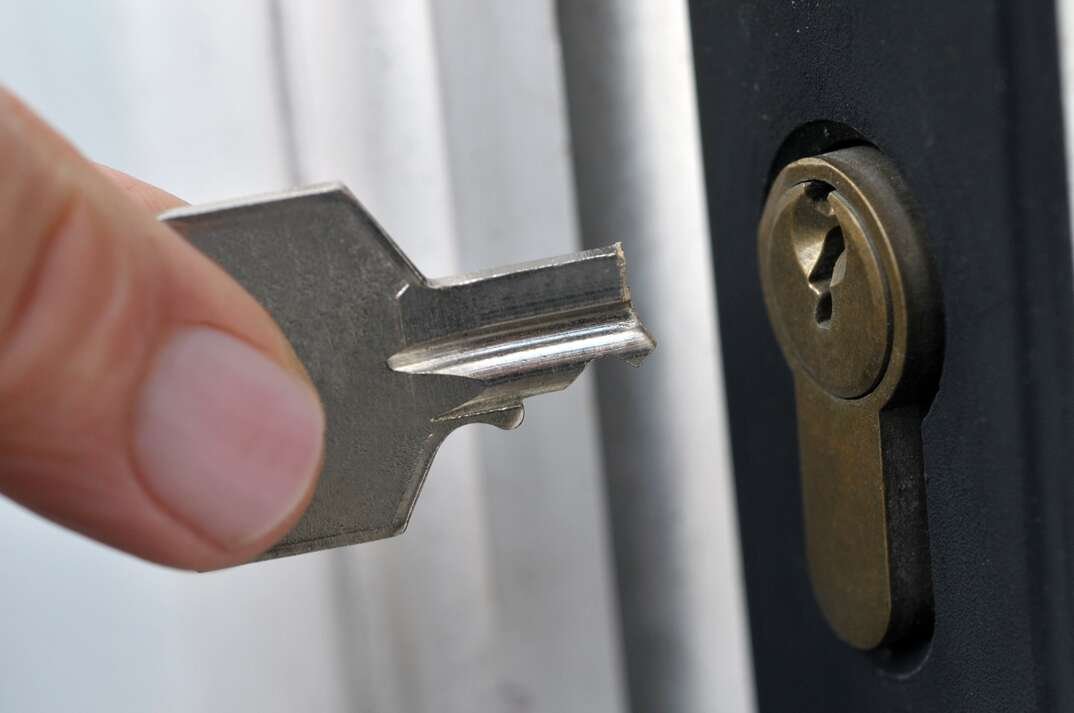
3. You Have a Broken Key Stuck in the Lock
Although common, a snapped key can be a major headache. This can occur for multiple reasons, like in the event of a door being misaligned or a key not being inserted all the way. Regardless of how it happens, a broken key can be difficult, but not impossible, to remove on your own.
To complete a lock extraction, spray some form of lubricant into the keyhole to dislodge any stuck mechanical pieces. You can then use a flathead screwdriver to align the lock in its vertical position, not turned in either direction. From here, attempt to gently remove the key with a pair of needle-nose pliers.
If you’re unable to remove the key after a few attempts, or if you notice stiff resistance when turning the lock, we recommend reaching out to a locksmith agency like Lock & Key. Professional locksmiths have specialised key extraction tools to help in this event.
4. Your Lock Spins but Won’t Open
A spinning lock is another frustrating lock issue that you might experience. Locks can spin when part of the mechanism is detached from the housing, causing the deadbolt to become unresponsive. In most cases, this issue is the result of a faulty mechanical component, not a friction or key issue. A broken tailpiece inside the cylinder could be to blame, but it could also be the fault of a misaligned screw or clip.
For this issue, lubrication won’t help because it’s a matter of mechanical failure, not friction. You’ll need to disassemble the lock to find the problem internally and remove the broken piece.
Depending on your mechanical know-how, this is likely better left to the professionals. Given that a full lock replacement is needed in some cases, you can have a professional complete the job without any fear of causing further damage.
5. Your Door Latch is Faulty
The door latch is the part of the lock that extends from the edge of the door, driving into the door frame. It features a spring-loaded design, and the latch bolt can be found at the external end of the device.
This door latch can have a few different issues that can prevent the lock from turning entirely. Check for these problems when inspecting your lock for latch-related issues:
Door or Door Frame is Warped
A warped door or door frame is fairly common, especially for doors that have been installed for decades. Over time, doors can be bent and twisted by millimetres, causing big issues despite not being noticeable. Even small changes to the alignment of the door latch can cause it to get “sticky”.
Some door materials are more susceptible to this problem than others: wooden doors are often more likely to warp than composite or metal doors. You can check to see if the door is misaligned by testing the latch when the door is open. If the latch moves freely when opened, the problem is likely inherent to the door or door frame.
You can solve this by sanding down the area where the friction occurs. In some cases where the warping is extreme, an entirely new door might be the only solution.
Strike Plate is Misaligned
Another reason why a lock can jam like this is if the strike plate is misaligned. The strike plate is the metal plate that is screwed into the door frame. It holds the deadbolt in place, and the lock can fail to engage if this plate is misaligned.
A great way to check the strike plate alignment is by smearing chalk on the latch bolt and closing the door. When the door is opened again, you’ll be able to see exactly where the latch is making contact with the door frame. From there, you can simply unscrew the strike plate and put it in line with where the latch is ending up.
When in Doubt, Call for Backup
Lock problems can easily ruin your day, but there are some things you can do before calling a locksmith. Having a bit of education surrounding lock parts can help you accurately identify the issue, but there are times when the problem is out of your comfort zone or ability to fix.