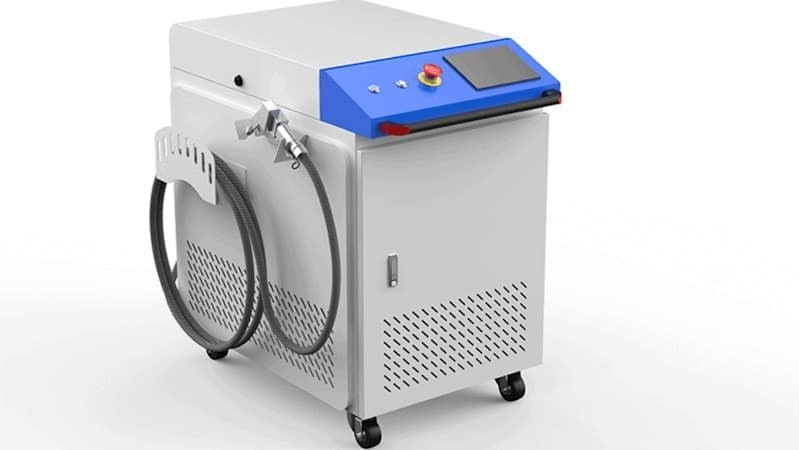
Is Investing in a Laser Cleaning Machine Worth the Hype?
So, you’ve probably seen those incredibly satisfying videos online: a beam of light zaps across a rusty, grimy surface, and instantly, a clean, pristine material is revealed underneath. That’s laser cleaning, and it’s not just for social media. This technology is rapidly changing industries from aerospace to historical restoration.
But as with any major purchase, the big question is: Is it a worthwhile investment for your business? The simple answer is, it depends. Investing in a laser cleaning machine can be a game-changer, slashing long-term costs and improving quality. Or, it could be an expensive tool that doesn’t fit your needs. Let’s break down the real costs and benefits to help you decide.
The Investment Reality: More Than Just the Sticker Price
Thinking about a laser cleaner means looking at the full financial picture, from the day you buy it to the day you power it on for the 10,00th time.
Initial Purchase Laser Cleaner Price
The upfront cost of a laser cleaning machine is the biggest hurdle for most. The price varies widely based on power and features. Here’s a general breakdown:
- Low-Power (50W – 100W): These are often portable, handheld units perfect for small, precise jobs. Expect a price range of $5,000 to $15,000.
- Mid-Range (200W – 500W): These machines offer a great balance of speed and power for workshops and manufacturing lines. They typically cost between $15,000 and $40,000.
- High-Power (1000W+): Built for heavy-duty industrial applications and automation, these powerful systems can range from $50,000 to over $100,000.
Operating and Maintenance Costs
This is where laser cleaning truly shines. Traditional methods come with a constant need to buy more supplies—sand, chemicals, pads, etc. Laser cleaning eliminates that.
- Energy Consumption: A laser cleaner uses electricity, but it’s surprisingly efficient. Industry data suggests operating costs are often just a few dollars per hour, far less than the cost of consumables for sandblasting or chemical dipping.
- No Consumables: You don’t need to buy abrasives, solvents, or pellets. This also means no storage costs for hazardous materials and no expensive disposal fees.
- Minimal Maintenance: The core component, the laser source, has a massive lifespan—often up to 100,000 hours. Routine maintenance is usually as simple as cleaning the protective lens.
- Labor Savings: These machines are easy to learn and operate. In many cases, you can reduce the labor hours needed for cleaning and completely eliminate the time spent on messy post-cleaning cleanup.
When Laser Cleaning Makes Perfect Financial Sense
A laser cleaner isn’t just a purchase; it’s an investment in efficiency and quality. In certain scenarios, the return on investment (ROI) is not just good, it’s outstanding.
High-Precision and High-Value Applications
This is laser cleaning’s sweet spot. When you can’t afford to damage the underlying material (the substrate), laser cleaning is the undisputed champion.
- Aerospace & Aviation: Safely removing paint and coatings from sensitive aircraft components without causing fatigue or micro-cracks.
- Automotive: Cleaning welding seams, preparing surfaces for bonding, and cleaning intricate molds without any wear and tear.
- Electronics: Gently cleaning micro-components and circuit boards without any static discharge or physical contact.
In these fields, one damaged part can cost thousands of dollars. A laser cleaner’s precision prevents these costly mistakes, making its ROI clear and fast.
ROI for Service Businesses and Manufacturing
- As a Service: A mobile laser cleaning business is a rapidly growing market. Imagine charging $150-$300 per hour for services like historical building restoration, mold remediation, or industrial equipment cleaning. With operating costs under $20 per hour, a machine can pay for itself surprisingly quickly.
- In Manufacturing: Integrating a laser cleaner into a production line can reduce downtime significantly. Studies in manufacturing settings show that eliminating the “cleanup” step from processes like sandblasting can boost overall productivity by 15-25%. Fewer rejected parts and a faster workflow lead to direct, measurable profit.
When It Doesn’t Make Sense (And It’s Okay!)
At Riselaser, we believe in fitting the right tool to the right job. A laser cleaner isn’t always the answer, and being honest about its limitations is important.
Technical Limitations
- Highly Reflective Metals: Materials like polished aluminum, copper, or brass can reflect the laser beam, making cleaning less efficient and potentially hazardous without the right setup.
- Very Thick Coatings: If you need to strip half an inch of old, heavy paint off a massive surface, a laser will be painstakingly slow. It excels at removing thin-to-moderate layers of contaminants.
Economic and Practical Drawbacks
- Low-Volume Users: If you’re a hobbyist or a small shop that only needs to clean a few items a month, the initial investment is very difficult to justify.
- Large, Non-Delicate Surfaces: Need to strip an entire ship’s hull or a large storage tank? Traditional methods like sandblasting are simply faster and more cost-effective for these massive-scale jobs where surface finish isn’t a top priority.
Operational Considerations: Safety and Upkeep
Running a laser cleaner is straightforward, but it requires a professional approach.
- Safety First! Laser cleaners are Class 4 lasers, the most powerful type. This is not a toy. Operating one requires a controlled environment to protect the eyes and skin. Proper personal protective equipment (PPE), especially certified laser safety glasses rated for the specific wavelength of your laser, is absolutely mandatory.
- Maintenance & Downtime: The good news is that maintenance is low. The main task is keeping the lens clean to ensure optimal performance. Because there are few moving parts, downtime is rare compared to mechanical cleaning systems, but it’s still wise to have a plan in place for routine checks.
Comparing the Alternatives
How does laser cleaning stack up against the old guard?
| Method | Best For | Pros | Cons |
| Laser Cleaning | Precision, high-value parts, automation. | No damage to substrate, no consumables, eco-friendly, low operating cost. | High initial cost, slower on large areas, not for thick coatings. |
| Sandblasting | Large, non-delicate surfaces where speed is key. | Fast, effective on thick rust/paint, low initial equipment cost. | Damages substrate, messy cleanup, health risks (silicosis), high consumable cost. |
| Chemical Cleaning | Complex shapes that can be dipped. | Thorough cleaning of intricate parts. | Hazardous materials, expensive disposal, can damage material, ongoing cost. |
| Ultrasonic Cleaning | Small, intricate parts in a controlled bath. | Excellent for tiny crevices, very gentle. | Limited by tank size, requires specific chemical solutions, not for large items. |
Your Decision Framework: A Simple Checklist
Feeling overwhelmed? Ask yourself these five questions to find your answer.
- What am I cleaning? Is the material delicate or valuable (aerospace part)? Or is it a rugged, large piece of structural steel?
- What is my top priority? Is it absolute precision and a perfect finish? Or is raw speed the most important factor?
- What is my cleaning volume? Are you cleaning parts continuously on a production line or just a few items per week?
- What’s my budget philosophy? Are you able to make a larger upfront investment to save significantly on operating costs and consumables in the long run?
- Who will be the operator? Do you have staff who can be trained on proper safety procedures for operating a Class 4 laser?
The Final Verdict
A laser cleaning machine is a powerful, transformative tool. It represents a shift from messy, consumable-based cleaning to precise, eco-friendly, and cost-effective surface treatment.
For businesses focused on high-value materials, precision work, and long-term operational efficiency, investing in a laser cleaner is absolutely worthwhile. The savings in labor, consumables, and rejected parts often create a rapid and impressive return on investment.
However, for those dealing with massive surface areas or working on a very tight budget with low volume, traditional methods may still be the more practical choice for now.
The key is to perform a careful and honest evaluation of your specific needs. If you’re ready to explore how this technology can fit into your workflow, our team at Riselaser is here to help you analyze your application and find the perfect solution.


